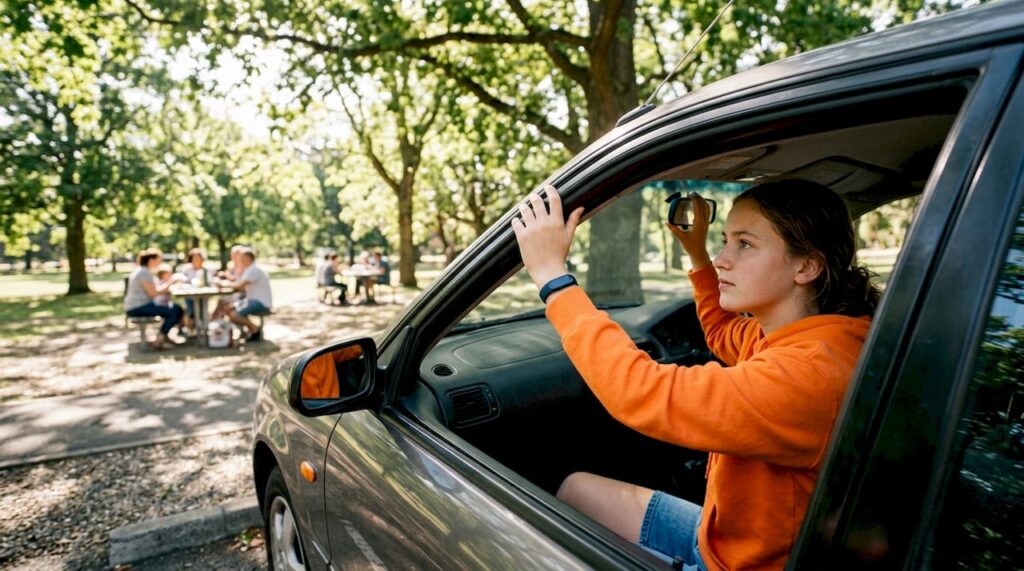
The highway on-ramp is where many new drivers experience their first real moment of panic. You are accelerating, traffic is flying by at 70 mph, and you have only a few seconds to find a gap.
If highway merging makes you grip the steering wheel until your knuckles turn white, this guide is for you. Here is how to merge smoothly and confidently.
1. Use the Entire On-Ramp
The biggest mistake new drivers make is creeping down the on-ramp at 30 mph and then stopping at the end to wait for a gap. Never stop at the end of an on-ramp unless traffic is completely backed up. The on-ramp is designed for you to accelerate. Use the entire length of the ramp to match the speed of the highway traffic.
2. Match the Speed
Highway merging is all about speed differentials. If highway traffic is moving at 65 mph, and you try to merge at 45 mph, you become a dangerous obstacle. Look for a gap in the traffic, check your mirrors, and accelerate firmly so that when you enter the lane, you are traveling at the exact same speed as the cars around you.
3. The “Zipper” Merge
Think of merging like a zipper on a jacket. One car from the highway, one car from the on-ramp. If you see a car slightly ahead of you on the ramp, let them merge first, then you take the next gap. Don’t race other drivers for the same spot.
4. Don’t Forget Your Blind Spot
As you are looking in your side mirror to find a gap, remember to do a quick physical shoulder check right before you cross the white line. Cars can easily hide in your blind spot, especially large trucks.
Still nervous about the highway? Highway driving is a specific skill that takes practice. [Book a Highway/Interstate Driving Lesson with Forward Driving School] (Link to booking page). We’ll take you on the highway in our dual-control car so you can practice merging with zero stress!
ARTICLE 6 (Targeting the Parent)
Publish Day: Thursday Target SEO Keywords: teen distracted driving, cell phone use while driving, talking to teen about texting and driving. Suggested URL: /blog/talking-to-your-teen-about-distracted-driving
Title: Phones and Pedals: How to Talk to Your Teen About Distracted Driving
We all know the statistics: distracted driving is a leading cause of crashes for teen drivers. But simply telling your teenager, “Don’t text and drive,” rarely works. Teens know it’s dangerous, but the psychological pull of a buzzing notification is incredibly strong.
As a parent, you need to move beyond lectures and implement practical, enforceable strategies to keep their eyes on the road. Here is how to tackle the phone problem effectively.
1. Set Up “Do Not Disturb While Driving”
Don’t rely on your teen’s willpower; rely on technology. Both Apple (iOS) and Android have built-in “Driving Focus” or “Do Not Disturb While Driving” modes. Set it up on their phone together so that when the phone detects driving motion, it automatically silences notifications and sends an auto-reply to texts saying, “I’m driving right now.”
2. Implement the “Glovebox Rule”
If the phone is in the cup holder or on the passenger seat, it will be looked at. Period. Make a hard rule: when the car is in drive, the phone goes in the glovebox, the center console, or the backseat. If they need to use GPS, the phone must be mounted on the dashboard before they put the car in gear.
3. Be the Example (This is the hard part)
Teens are incredibly observant of hypocrisy. If you tell them not to text and drive, but they see you glancing at your phone at red lights or reading emails while driving them to school, your words mean nothing. You must model the exact behavior you expect from them. Narrate your actions: “I’m putting my phone in the cup holder now so I can focus on driving.”
4. Create a “No-Judgment” Rescue Plan
Sometimes, teens text and drive because they are running late and are afraid to call you to say they will be late. Tell your teen: “If you are running late, or if you are too tired to drive safely, call me. I will not yell at you for being late. I will always come get you or give you a ride, no questions asked.” Remove the pressure that causes them to rush and multitask.
Start their driving journey with the right habits. At Forward Driving School, distracted driving awareness is built into our core curriculum. [Enroll your teen in our Comprehensive Behind-the-Wheel Package] (Link to pricing page) and let us help you raise a focused, safe, and responsible driver.