
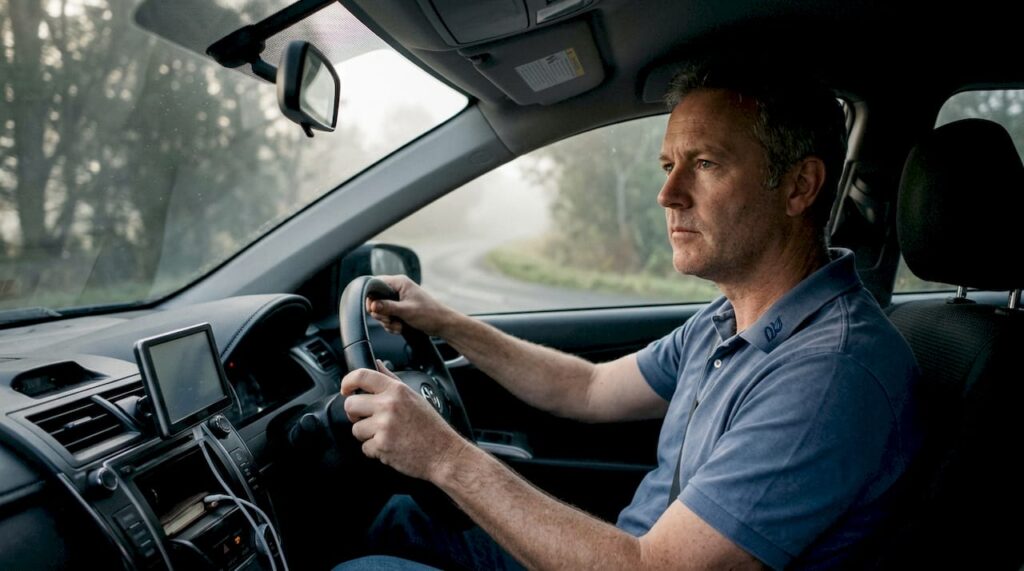
Defensive driving is defined as a set of techniques that help you anticipate hazards and make safe decisions before emergencies develop. Every driver, from a teenager behind the wheel for the first time to an adult with decades of experience, benefits from applying these skills consistently. The 3-second rule, recommended by DMV experts as a foundational standard, is one of the most widely cited techniques in any defensive driving guide. NHTSA safety recommendations reinforce that proactive awareness, not just reaction speed, separates safe drivers from dangerous ones.
1. What are the most important defensive driving tips to practice daily?
The single most effective habit is maintaining a safe following distance at all times. Keep at least a 3-second gap behind the vehicle ahead under normal conditions, and extend that to 4 or more seconds in rain, heavy traffic, or fog. Count from when the car ahead passes a fixed point until you reach the same point. If you arrive before three seconds, you are too close.
Scan 10 to 15 seconds ahead on the road to spot hazards early. That distance gives you time to adjust speed or change lanes before a situation becomes critical. Most drivers focus only on the car directly in front of them, which is a form of tunnel vision that defensive driving techniques are specifically designed to break.
- Check your mirrors every 5 to 8 seconds. Frequent mirror checks keep you aware of vehicles in blind spots and surrounding lanes, reducing the chance of a surprise collision.
- Expect other drivers to make mistakes. Assume the car at the intersection might run the light. Assume the merging truck has not seen you. This mindset keeps you ready to react.
- Signal clearly and minimize lane changes. Every unnecessary lane change is an added risk. Use your turn signal early and commit to the move.
- Control your speed. Speed limits are set for ideal conditions. In rain or heavy traffic, slower is safer.
- Minimize distractions. Put your phone away, avoid eating while driving, and manage your emotional state before you start the car.
- Always have an escape route. Know where you can steer if the car ahead stops suddenly. This is not paranoia. It is preparation.
Pro Tip: Set a mental reminder to check your mirrors every time you pass a street sign. It builds the habit without requiring a timer.
2. How weather and road conditions change your approach

Rain, snow, and fog demand a different version of every technique you already use. The 3-second rule becomes a 4-second or longer rule the moment conditions worsen. Wet roads reduce tire traction and extend braking distances significantly. Adjust your following distance before you feel the need to, not after.
Reduce your speed below the posted limit when visibility drops or the road surface is slick. Speed limits assume dry, clear conditions. Driving at the limit in a downpour is not safe driving. It is a legal speed with an illegal level of risk.
- Use headlights in rain and fog. Headlights are not just for seeing. They help other drivers see you. Many modern vehicles have automatic lights, but check that yours are actually on.
- Watch for pedestrians in poor conditions. Pedestrians in rain often move quickly and unpredictably. They may step off a curb without looking because their visibility is also reduced.
- Understand traction control. Modern vehicles use traction control systems to prevent wheel spin on slick surfaces. These systems help, but they do not eliminate the physics of stopping distance. Give yourself more space regardless.
Pro Tip: Before driving in rain, test your brakes gently at low speed in an empty area to feel how your vehicle responds. It takes five seconds and tells you a lot.
3. Advanced techniques for proactive hazard anticipation
Proactive hazard anticipation means scanning road edges and beyond immediate traffic to catch early warning signs. A child near the curb, a car door about to open, a dog running toward the road. These are all readable signals if you train yourself to look for them. Most drivers only see what is directly in their path.
“Defensive driving fundamentally involves hazard anticipation by monitoring road edges, pedestrian movements, and weather effects, shifting from reactive to proactive driving.” — Shell Global
Always maintain an escape route beside or behind you. This means knowing which lane or shoulder you can move into if the car ahead stops without warning. Braking alone is not always enough. Having a clear path to steer into can prevent a collision that braking cannot.
- Scan mirrors every 5 to 8 seconds. Situational awareness is not a one-time check. It is a continuous loop of observation.
- Avoid driving while fatigued or emotional. Emotional or tired driving reduces judgment and slows reaction time. If you are angry, grieving, or exhausted, delay the trip if possible.
- Know the legal value of certification. Courts in some jurisdictions heavily incentivize defensive driving course completion. In Bexar County, Texas, for example, ticket dismissal rates reach 80% for eligible violations after course completion. That is a concrete legal benefit on top of the safety benefit.
For drivers looking to build these habits from the ground up, Forwardschool’s defensive driving guide covers updated techniques for 2026 in detail.
4. How vehicle maintenance supports your defensive driving
Your defensive driving techniques are only as good as the vehicle executing them. Brakes, tires, lights, and windshield wipers must all be in good working condition to support safe driving performance. A worn tire cannot grip the road the way a new one can, no matter how skilled the driver. Maintenance is not optional. It is part of the technique.
Modern vehicles come equipped with safety features that actively support defensive behavior. Seat belts, anti-lock brakes, and lane-keeping assist each reduce the severity of mistakes or help prevent them entirely. Use these features deliberately, not as a substitute for attention, but as a backup layer.
Secure loose items in your vehicle before driving. A water bottle rolling under the brake pedal is a real hazard. So is a bag sliding off the seat and distracting you at a critical moment. A clean, organized cabin is part of a defensive setup.
Driving significantly below the speed limit can also create risk. Other drivers do not expect a slow-moving vehicle and may not react in time. Maintain a speed that matches traffic flow while staying within the legal limit.
| Vehicle system | Why it matters for safety |
|---|---|
| Tires | Worn tread reduces grip and extends stopping distance |
| Brakes | Degraded brakes increase reaction-to-stop time |
| Headlights and taillights | Visibility in low light and bad weather depends on working lights |
| Windshield wipers | Clear sightlines are non-negotiable in rain or snow |
| Lane-keeping assist | Reduces drift risk during momentary distraction |
Forwardschool’s behind-the-wheel training covers vehicle familiarity as part of every lesson, so drivers learn to use their car’s safety systems correctly from day one.
5. Defensive driving tips for parents teaching teen drivers
Parents are the most influential driving instructors most teens will ever have. The habits you model in the car, including how you handle merges, how you react to aggressive drivers, and whether you check your mirrors, become the habits your teen internalizes. Defensive driving tips for parents start with your own behavior behind the wheel.
When supervising a new driver, narrate your observations out loud. Say “I’m checking my mirrors before changing lanes” or “I’m slowing down because that pedestrian looks like they might step off the curb.” This verbal coaching builds the scanning habits that formal instruction reinforces. Teen drivers who receive consistent supervised practice develop hazard recognition faster than those who only practice during lessons.
Forwardschool’s teen driving courses are built around exactly this kind of structured skill development. Professional instruction combined with parent-supervised practice creates the strongest foundation for safe driving. The driver education benefits extend beyond the license test and into a lifetime of safer decisions on the road.
6. Defensive driving tips for adults returning to the road
Adult drivers returning after a long break, or those who have developed habits that no longer serve them, benefit from a structured refresher. Defensive driving tips for adults are not about starting over. They are about recalibrating. Habits formed years ago may not account for modern traffic density, distracted driving rates, or updated road design.
An adult refresher course covers the same core techniques as a teen course but applies them to real-world scenarios adults face, including highway merging, urban navigation, and driving in unfamiliar areas. The adult driving tips that build real confidence focus on awareness and decision-making, not just vehicle control.
One of the most common issues adult drivers face is overconfidence. Years of experience can create the false belief that hazard anticipation is automatic. It is not. Scanning, mirror checks, and escape route awareness require active attention every time you drive, regardless of how long you have held a license.
Key takeaways
Defensive driving reduces accident risk by shifting your focus from reaction to anticipation, and every technique in this guide supports that single goal.
| Point | Details |
|---|---|
| Follow the 3-second rule | Maintain a 3-second gap in normal conditions and extend to 4+ seconds in bad weather. |
| Scan ahead and around | Look 10–15 seconds ahead and check mirrors every 5–8 seconds to stay fully aware. |
| Always have an escape route | Know where you can steer if the car ahead stops suddenly, beyond relying on braking alone. |
| Maintain your vehicle | Brakes, tires, lights, and wipers must be in good condition for techniques to work. |
| Manage your mental state | Fatigue and emotion reduce judgment. Delay driving when either is a factor. |
What I’ve learned about the defensive driving mindset
Most drivers think defensive driving is about what you do with your hands and feet. After years of watching drivers learn and improve, I am convinced the real work happens in your head.
The biggest shift is moving from reactive to anticipatory thinking. Reactive drivers brake when they see danger. Anticipatory drivers read the road and adjust before danger forms. That gap, between seeing a hazard and having already prepared for it, is where accidents are prevented.
Tunnel vision is the enemy of good driving. Drivers who stare at the car ahead miss the pedestrian stepping off the curb two blocks up, the truck about to merge without signaling, and the light about to change at the intersection ahead. Training yourself to scan wide and far is uncomfortable at first. It feels like you are looking away from where you should be looking. You are not. You are building the full picture.
Emotional regulation matters more than most drivers admit. I have seen skilled drivers make terrible decisions because they were angry or distracted by a difficult phone call. The car does not care about your mood. The road does not adjust for your stress level. Checking your mental state before you start the engine is as important as checking your mirrors once you are moving.
Refresher courses are not just for new drivers or drivers with violations. They are for anyone who wants to stay sharp. The drivers I have seen improve the most are the ones who treat driving as a skill that requires ongoing practice, not a credential earned once and forgotten.
— Andre
Forwardschool builds the habits that keep you safe
Professional driver education does more than prepare you for a license test. It builds the scanning habits, space management skills, and hazard awareness that define a genuinely safe driver.
Forwardschool has been training teen and adult drivers in San Jose since 2010, with California DMV-registered instructors and vehicles equipped with dual brake pedals for maximum safety during lessons. Whether you are a first-time driver or an adult looking to sharpen your skills, the driver education programs at Forwardschool cover every technique in this guide with hands-on, behind-the-wheel practice. Teens and parents can review the full education benefits and course options to find the right fit.
FAQ
What is the 3-second rule in defensive driving?
The 3-second rule means keeping at least a 3-second gap between your vehicle and the one ahead under normal conditions. Extend that gap to 4 or more seconds in rain, fog, or heavy traffic.
What are the core defensive driving techniques?
The core techniques include maintaining safe following distance, scanning 10–15 seconds ahead, checking mirrors every 5–8 seconds, minimizing distractions, and always knowing your escape route.
How do defensive driving tips differ for teens vs. adults?
Teen drivers benefit from building habits from scratch through structured instruction. Adult drivers focus on recalibrating existing habits and addressing overconfidence that can develop after years of experience.
Can completing a defensive driving course dismiss a traffic ticket?
In some jurisdictions, yes. Courts in areas like Bexar County, Texas, report an 80% ticket dismissal rate for eligible violations after course completion, though court approval must be obtained before starting the course.
How often should drivers check their mirrors?
Checking mirrors every 5–8 seconds maintains full situational awareness of vehicles in blind spots and surrounding lanes, which is a standard recommendation for safe, defensive driving.
Recommended
- Why Learn Defensive Driving in 2026: A Complete Guide – https://www.forwardschool.com
- Types of Driving Courses: Your 2026 Selection Guide – https://forwardschool.com
- Driver License Preparation Tips That Get You Passing – https://forwardschool.com
- Adult Driving Tips That Build Real Confidence – https://forwardschool.com